 Master Poker
中文Host a game free
Master Poker
中文Host a game free
Blind structures & chip values that just work
Get the blinds wrong and the game is either a limp-fest or a crapshoot. Here are the structures that make a home game play properly — for cash and for tournaments.
Cash games: pick stakes by the buy-in, not the other way round
Start from what a comfortable buy-in is for your group, then set the big blind to 1/100th of it. 100 big blinds deep is the standard that makes real poker possible — raises, calls and folds all stay meaningful.
| Comfortable buy-in | Blinds | Typical pot | Feels like |
|---|---|---|---|
| $10 | $0.05/$0.10 | $1–3 | Beer money |
| $20 | $0.10/$0.25 | $2–6 | Classic kitchen game |
| $50 | $0.25/$0.50 | $5–15 | Serious fun |
| $100 | $0.50/$1 | $10–30 | Card-room feel |
Chip values: four colours, small-heavy
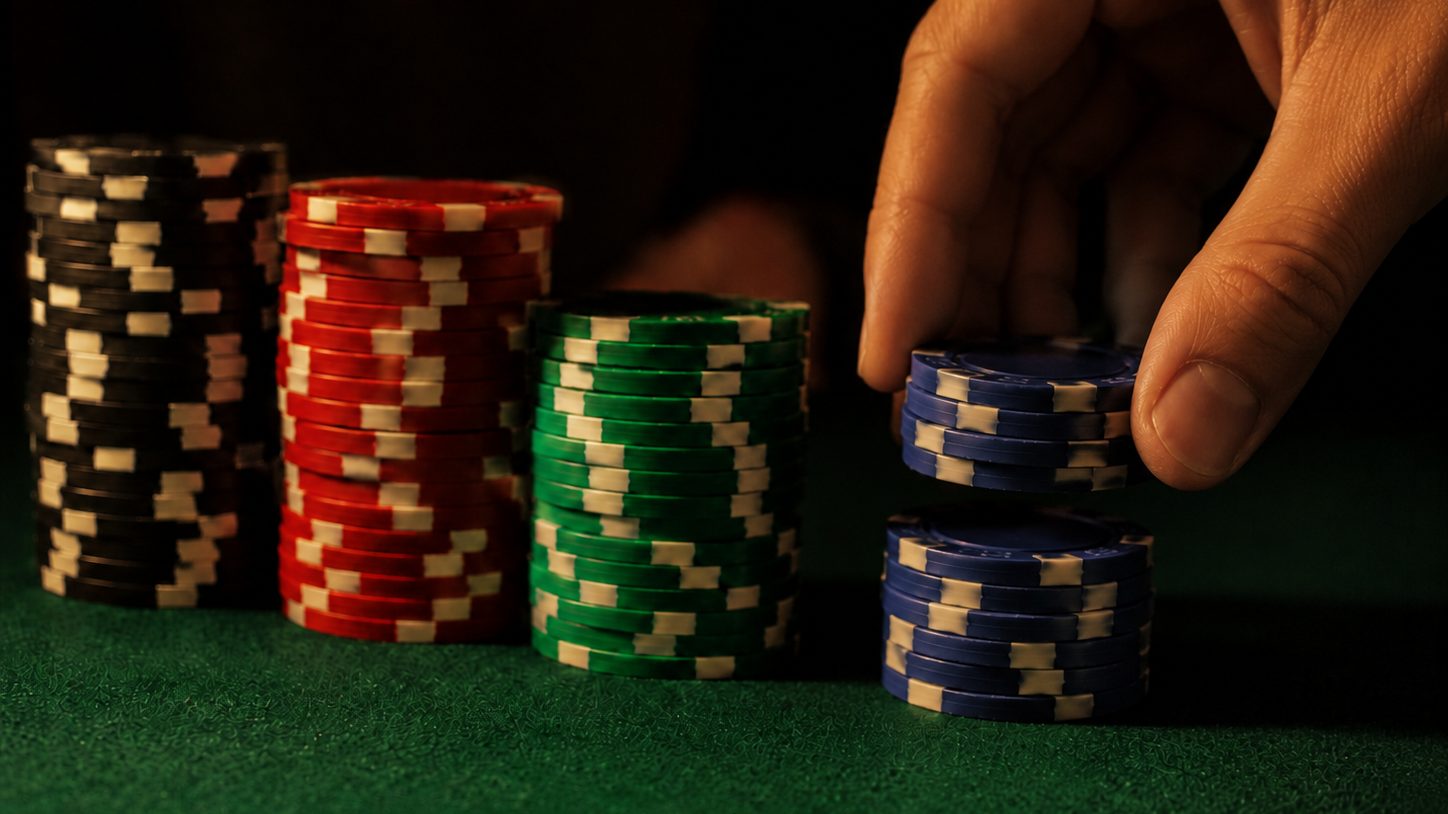
Whatever your stakes, keep the same shape: the two smallest denominations should be ~75% of the chips. Players bet small chips constantly and break big ones rarely. A 500-chip set covers 8 players at any of the stakes above.
Tournaments: blinds double, on a clock
A tournament needs the opposite of a cash game: blinds that rise, so it ends. Give everyone a fixed stack (no rebuys after an agreed point) and raise blinds on a timer:
| Level | Blinds | Time | Avg stack in BBs* |
|---|---|---|---|
| 1 | 25 / 50 | 0:00 | 100 |
| 2 | 50 / 100 | 0:20 | 50 |
| 3 | 100 / 200 | 0:40 | 25 |
| 4 | 150 / 300 | 1:00 | ~17 |
| 5 | 200 / 400 | 1:20 | ~12 |
| 6 | 300 / 600 | 1:40 | ~8 |
*assumes 6 players, 5,000 chips each, no eliminations — real games shrink faster.
- Want it longer? 30-minute levels, or add in-between levels (75/150, 250/500).
- Want it shorter? 15-minute levels — a "turbo" that fits a school night.
- The golden rule: when the average stack drops under ~10 big blinds, the poker is over and the coin-flipping has begun. Structure so that happens near your target end time.
The three classic mistakes
- Blinds too big for the buy-in (a $10 buy-in at $0.25/$0.50 is 20BB — that's a shove-fest, not poker).
- Too many chip colours — four denominations cover everything; six causes constant making-change.
- Raising cash-game blinds over the night — that's a tournament mechanic; in a cash game the blinds never move.